
Client Overview
In the competitive world of wellness retreat marketing, having a high-quality experience is no longer enough. Businesses must also create a strong online presence that reflects the value of their services and attracts the right audience.
A luxury wellness retreat based in Costa Rica faced this exact challenge. While their in-person experience was exceptional, their digital presence failed to communicate the same level of quality.
They offered premium services including yoga retreats, meditation programs, and full wellness packages designed for international travelers. Despite this, they struggled to consistently generate bookings and scale their business.
That’s when they partnered with Zheen Ali Consulting to transform their wellness retreat marketing strategy and build a system that could drive predictable growth.
The Problem
One of the biggest issues in wellness retreat marketing is the gap between experience and presentation—and this retreat was a perfect example.
Their website did not reflect the luxury nature of their services. It was outdated, difficult to navigate, and not optimized for mobile users. In an industry where visuals and user experience play a major role in decision-making, this created a major disadvantage.
Additionally, there was no clear conversion funnel.
Visitors would land on the site but were not guided toward booking. There were no strong calls-to-action, no structured flow, and no optimized landing pages designed to convert traffic into paying clients.
From a wellness retreat marketing perspective, this meant they were losing a large percentage of potential customers before they even had a chance to engage.
Their previous Meta Ads campaigns also lacked direction.
Instead of targeting high-intent travelers, their ads were too broad and failed to connect with the right audience. The messaging did not highlight the transformational aspect of the retreat, which is a key driver in wellness retreat marketing success.
As a result, their ad spend produced little return.
Visitors who were interested had no structured way to move forward, resulting in lost potential clients.
Their previous advertising efforts also lacked effectiveness.
They had experimented with Meta Ads but without a clear wellness retreat marketing strategy. Their campaigns targeted broad audiences without considering intent or demographics.
Instead of reaching high-income travelers actively searching for wellness experiences, their ads were being shown to people unlikely to convert.
The creatives themselves were also underwhelming.
Rather than telling a story or showcasing transformation, the ads relied on generic visuals that failed to capture attention or evoke emotion—two key elements in successful wellness retreat marketing.
Finally, the business lacked proper tracking and data.
Without analytics, they had no insight into user behavior, campaign performance, or conversion rates. This made it impossible to optimize or scale their efforts effectively.
The Strategy
To solve these challenges, we developed a comprehensive wellness retreat marketing strategy designed to align their digital presence with the quality of their services.
The strategy focused on three core pillars:
A high-converting website, targeted Meta Ads campaigns, and a structured conversion funnel.
The goal was to create a seamless experience that would attract the right audience, engage them effectively, and guide them toward booking.
Website Transformation
A strong website is the foundation of any successful wellness retreat marketing strategy, and this was our first priority.
We completely redesigned the website to reflect a premium brand identity.
The new design focused on simplicity, elegance, and emotional impact. High-quality visuals were used to showcase the environment, accommodations, and experiences, allowing visitors to immediately connect with the retreat.
The messaging was also restructured.
Instead of focusing solely on features, we emphasized transformation. This approach is essential in wellness retreat marketing, as clients are not just buying a service—they are investing in an experience that improves their well-being.
We created a clear user journey that guided visitors step-by-step.
From the homepage, users could easily explore retreat offerings, understand the value, and move toward booking. Clear and compelling calls-to-action were strategically placed throughout the site.
Mobile optimization was a major focus.
The new site was fully responsive, fast-loading, and designed specifically for mobile users. This significantly improved engagement and reduced bounce rates.
We also introduced trust-building elements such as testimonials and social proof.
In wellness retreat marketing, trust is a key factor in decision-making. By showcasing real experiences from past clients, we increased credibility and reduced hesitation.
The booking process was streamlined to remove friction.
We designed a dedicated booking page with clear information, transparent pricing, and an easy inquiry system, making it simple for users to take action.
Meta Ads Strategy for wellness retreat marketing strategy
With a strong foundation in place, we moved on to implementing a targeted wellness retreat marketing strategy using Meta Ads.
The first step was defining the ideal audience.
We focused on individuals aged 25–55 in the United States and Canada who had an interest in wellness, travel, yoga, and personal development. These users were more likely to invest in a premium retreat experience.
This level of targeting is essential in wellness retreat marketing, as it ensures that ad spend is directed toward high-quality prospects.
Next, we developed a creative strategy centered around storytelling.
Instead of simply promoting the retreat, we highlighted the emotional transformation that clients could experience. The ads spoke directly to individuals feeling stressed, overwhelmed, or disconnected, positioning the retreat as a solution.
We tested multiple ad formats, including video, carousel, and static images.
Each format played a role in the overall wellness retreat marketing funnel, from capturing attention to driving conversions.
Funnel & Retargeting Strategy
An effective wellness retreat marketing strategy goes beyond attracting traffic—it requires a structured funnel.
At the top of the funnel, we focused on awareness and engagement. These ads introduced the brand and captured interest.
In the middle of the funnel, we retargeted users who had interacted with the ads or visited the website. This helped reinforce trust and provide additional information.
At the bottom of the funnel, we ran conversion-focused campaigns targeting users who were ready to book.
This layered approach ensured that potential clients were guided through every stage of their decision-making process.
Data, Tracking & Optimization for wellness retreat marketing strategy
No wellness retreat marketing strategy is complete without proper tracking and optimization.
We implemented the Meta Pixel and set up conversion tracking to monitor key actions such as page views, inquiries, and bookings.
This data allowed us to make informed decisions and continuously improve performance.
We tested different audiences, creatives, and messaging to identify what worked best.
Over time, this data-driven approach led to improved efficiency and stronger results.
Execution Process
The execution phase was structured and focused on continuous improvement.
In the early stages, we launched the new website and initial ad campaigns to gather data.
As insights came in, we refined the strategy.
High-performing campaigns were scaled, while underperforming elements were adjusted or removed.
We also made ongoing improvements to the website based on user behavior.
Small changes, such as optimizing headlines and simplifying forms, had a significant impact on conversions.
This iterative process is a key component of successful wellness retreat marketing, as it ensures consistent growth over time.
Scaling Growth & Building Long-Term Success
After achieving a 140% increase in bookings within the first 90 days, the next focus was not just growth—but stability and long-term scalability.
Early success is great, but without the right systems in place, results can fluctuate. The goal at this stage was to turn those initial wins into a consistent and predictable flow of bookings.
The first step was analyzing performance data.
By this point, we had gathered enough insights to clearly understand what was working. We identified which audiences were converting at the highest rate, which ad creatives were driving the most engagement, and which messaging resonated most with potential clients.
Instead of continuing to test broadly, we shifted toward refinement.
High-performing campaigns were prioritized, while underperforming ones were gradually phased out. This allowed us to improve efficiency and make better use of the advertising budget.
Scaling was approached carefully.
Rather than dramatically increasing ad spend overnight, we expanded budgets gradually on the campaigns that were already delivering strong results. This helped maintain performance while increasing reach.
At the same time, new audiences were introduced using lookalike targeting.
By leveraging data from previous bookings and inquiries, we were able to reach people who shared similar behaviors and interests. This significantly improved lead quality and helped maintain a steady flow of high-intent traffic.
Strengthening the Brand Through Content
As performance improved, it became clear that long-term success would depend on more than just ads.
We began focusing on building a stronger brand presence through consistent and engaging content.
Instead of only promoting retreat packages, the content strategy shifted toward storytelling and lifestyle.
We showcased what a typical day at the retreat looked like—from morning yoga sessions to evening relaxation. We highlighted the environment, the atmosphere, and the emotional experience guests could expect.
We also shared educational content around stress, burnout, and overall well-being.
This helped position the retreat as more than just a getaway. It became a solution for people looking to reset and improve their lifestyle.
Client testimonials played a major role as well.
Real stories from past guests added credibility and gave potential clients a clearer picture of what they could expect. These stories created trust and made the decision process easier.
Over time, this content helped build a stronger connection with the audience and kept the brand top-of-mind.
Improving Lead Quality and Conversions
As traffic increased, the focus shifted toward improving the quality of leads and maximizing conversions.
More traffic does not always mean better results. The goal was to attract the right people—those who were genuinely interested and ready to invest in the experience.
We started by refining the inquiry process.
The forms were updated to include more detailed questions, allowing the team to better understand each lead’s intentions, preferences, and budget. This helped filter out low-quality inquiries and prioritize serious prospects.
Follow-up communication was also improved.
Instead of sending generic responses, each lead received a more personalized reply based on their interests. This created a more professional and high-end experience from the very first interaction.
Small changes in communication can make a big difference, especially for premium services.
We also continued optimizing the booking process.
Steps were simplified, messaging was clarified, and common objections were addressed directly on the page. The easier it was for someone to understand the offer, the more likely they were to move forward.
Creating Repeat Business and Referrals
One of the most valuable opportunities came from past clients.
People who had already experienced the retreat were far more likely to return or recommend it to others.
To take advantage of this, we introduced simple retention strategies.
Email follow-ups were used to stay connected with previous guests. These emails included updates, wellness tips, and announcements about upcoming retreat dates.
Exclusive offers were also introduced for returning clients.
This not only encouraged repeat bookings but also made clients feel valued and appreciated.
Social media played a role as well.
By engaging with past guests and encouraging them to share their experiences, the retreat was able to generate organic visibility and attract new clients through word-of-mouth.
Expanding Services and Increasing Revenue
With a strong system in place, the retreat was in a position to grow beyond its original offerings, a key milestone in scaling wellness retreat marketing effectively.
Instead of relying on a single type of retreat, new packages were introduced to appeal to different audiences.
Shorter retreats were created for individuals with limited time, while premium packages were designed for clients looking for a more exclusive experience.
This allowed the business to reach a wider audience without significantly increasing marketing costs.
It also increased the overall value of each client, as returning guests could explore different types of experiences over time.With a strong system in place, the retreat was in a position to grow beyond its original offerings.
Instead of relying on a single type of retreat, new packages were introduced to appeal to different audiences.
Shorter retreats were created for individuals with limited time, while premium packages were designed for clients looking for a more exclusive experience.
This allowed the business to reach a wider audience without significantly increasing marketing costs.
It also increased the overall value of each client, as returning guests could explore different types of experiences over time.
Standing Out in a Competitive Market
Costa Rica is a popular destination for wellness retreats, which means competition is high.
However, most competitors were not investing heavily in their online presence.
This created an opportunity.
With a professional website, strong ad campaigns, and consistent branding, the retreat was able to position itself above others in the market.
From the first impression to the final booking, everything felt polished and intentional.
This level of consistency helped build trust and made the brand more appealing to high-value clients.
Key Takeaways
This project reinforced several important principles.
A great service alone is not enough. How it is presented online plays a major role in success.
Targeting the right audience will always outperform reaching a large but unqualified group of people.
Small improvements in user experience and communication can lead to significant increases in conversions.
And most importantly, long-term growth comes from consistent effort—not one-time changes.
Building a Predictable Booking System
Once the retreat began seeing consistent results, the focus shifted toward building a system that could reliably generate bookings month after month.
At this stage, the goal was no longer just growth—it was predictability.
A major issue many businesses face in wellness retreat marketing is inconsistency. Some months perform well, while others fall short. To avoid this, we focused on creating a structure that would stabilize performance and reduce uncertainty.
The first step was understanding booking patterns.
We analyzed when people were most likely to book, how far in advance they planned their trips, and which times of the year generated the most interest. This allowed us to better forecast demand and align marketing efforts accordingly.
Instead of running the same campaigns year-round, we adjusted strategies based on seasonal trends—an important principle in wellness retreat marketing.
For example, colder months in North America created a natural increase in interest for tropical retreats. During these periods, we increased ad spend and pushed more aggressive campaigns.
During slower periods, the focus shifted toward nurturing leads and building awareness rather than immediate conversions.
This approach helped maintain a steady flow of interest throughout the year.
Advanced Audience Targeting

As campaigns matured, we began refining audience targeting even further.
In wellness retreat marketing, targeting is one of the most important factors that determines success or failure.
Rather than relying only on interests, we started layering multiple data points to reach more qualified individuals.
This included targeting based on behaviors such as frequent travel, online purchasing habits, and engagement with wellness-related content.
We also excluded audiences that were unlikely to convert.
This helped reduce wasted ad spend and improved overall campaign efficiency.
Another important step was segmenting audiences based on intent.
Some users were just discovering the brand, while others had already visited the website or interacted with ads multiple times.
By tailoring messaging to each group, we were able to create a more personalized experience—something essential in high-end wellness retreat marketing.
For example, someone seeing the retreat for the first time would receive a different message than someone who had already viewed the booking page.
This level of segmentation played a major role in improving conversion rates.
Creative Testing and Performance Improvements
Creative performance was one of the biggest drivers of success in this wellness retreat marketing campaign.
Instead of relying on a few ads, we continuously tested new variations to see what resonated best.
This included experimenting with:
- Different headlines and messaging angles
- Various image and video styles
- Emotional vs informational content
- Short-form vs long-form video
Some creatives focused on relaxation and escape, while others highlighted transformation and personal growth—both key emotional drivers in wellness retreat marketing.
By testing these different angles, we were able to identify what connected most with the audience.
Winning creatives were scaled, while underperforming ones were replaced.
This constant cycle of testing and improvement kept campaigns fresh and effective.
It also prevented ad fatigue, which can reduce performance over time.
Improving the Customer Journey
Beyond ads and targeting, a major focus in wellness retreat marketing is improving the overall customer journey.
Every interaction—from the first ad click to the final booking—needed to feel smooth and intentional.
We looked at the entire experience from the customer’s perspective.
Were they getting the information they needed quickly?
Did they feel confident in the decision?
Were there any points of confusion or hesitation?
By answering these questions, we were able to identify areas for improvement.
We simplified navigation, clarified messaging, and ensured that important details were easy to find.
We also made sure that communication remained consistent across all touchpoints.
The message in the ads matched the message on the website, which is a critical factor in successful wellness retreat marketing campaigns.
This consistency helped build trust and made the experience feel more professional.
Leveraging Social Proof at Scale
As more clients booked and attended the retreat, we began leveraging social proof more aggressively.
In wellness retreat marketing, trust is one of the biggest conversion drivers.
This included collecting testimonials, reviews, and user-generated content from guests.
Instead of keeping this content limited to the website, we integrated it into the marketing strategy.
Testimonials were used in ads, landing pages, and email campaigns.
Seeing real people share their experiences made a significant impact on potential clients.
It helped reduce doubt and made the retreat feel more relatable and trustworthy.
Video testimonials were especially effective.
They provided a more authentic and emotional perspective, allowing viewers to connect with the experience on a deeper level.
Automating Key Processes
As the business grew, efficiency became increasingly important in scaling wellness retreat marketing systems.
To handle the increase in inquiries and bookings, we introduced automation where possible.
This included:
- Automated email responses for new inquiries
- Follow-up sequences for leads who had not yet booked
- Reminder emails for upcoming retreats
- Post-retreat follow-ups for feedback and retention
Automation allowed the team to maintain a high level of communication without being overwhelmed.
It also ensured that no leads were missed or forgotten.
At the same time, we maintained a balance between automation and personalization.
While systems handled initial communication, more detailed interactions were still customized to maintain a premium feel.
Increasing Lifetime Customer Value
Another key focus in wellness retreat marketing is maximizing the value of each client.
Instead of treating each booking as a one-time transaction, we looked at ways to extend the relationship.
This included offering upsells such as private sessions, upgraded accommodations, or additional services.
We also introduced incentives for repeat bookings.
Returning clients were offered exclusive benefits, making them more likely to come back.
Over time, this approach significantly increased overall revenue without requiring additional ad spend.
Strengthening the Business Foundation
Beyond marketing, the improvements had a broader impact on the business as a whole.
With a steady flow of bookings, the retreat was able to plan more effectively.
They could schedule staff, manage resources, and prepare for upcoming retreats with greater confidence.
Financial stability also improved.
Instead of relying on unpredictable revenue, the business now had a clearer picture of its monthly performance.
This allowed for better decision-making and long-term planning.
Final Expansion Phase
As performance continued to improve, the retreat entered a new phase of growth.
They began exploring partnerships with influencers and content creators in the wellness space.
This helped expand their reach and attract new audiences.
They also invested in higher-quality content production, further enhancing their brand image.
At this stage, wellness retreat marketing was no longer just about generating bookings—it was about building a recognizable and trusted brand.
Results
The results of this wellness retreat marketing strategy were substantial.
Within 90 days, bookings increased by 140%.
The website conversion rate improved significantly, turning more visitors into paying clients.
Cost per lead decreased, allowing the business to generate more inquiries at a lower cost.
Traffic quality improved, with a higher percentage of visitors coming from high-value markets.
Engagement across Meta Ads increased, and the brand established a strong online presence.
Long-Term Impact
Beyond the immediate results, the retreat experienced lasting benefits from their improved wellness retreat marketing strategy.
They now had a scalable system for generating consistent bookings.
Their brand positioning improved, and they were perceived as a premium destination in the wellness space.
With a strong digital foundation, they were able to plan future retreats with confidence and continue growing their business.
Conclusion
This case study demonstrates the power of a well-executed wellness retreat marketing strategy.
The Costa Rica retreat already had an incredible product, but without the right digital presence, they were unable to reach their full potential.
By combining a high-converting website, targeted Meta Ads, and a structured funnel, we transformed their online performance and unlocked significant growth.
About Zheen Ali Consulting
At Zheen Ali Consulting, we specialize in helping businesses grow through strategic wellness retreat marketing, website design, and high-performing advertising campaigns.
We focus on building systems that generate real results—more leads, more bookings, and more revenue.
If your business isn’t performing the way it should online, the problem isn’t your service—it’s your strategy.
And that’s exactly what we fix.
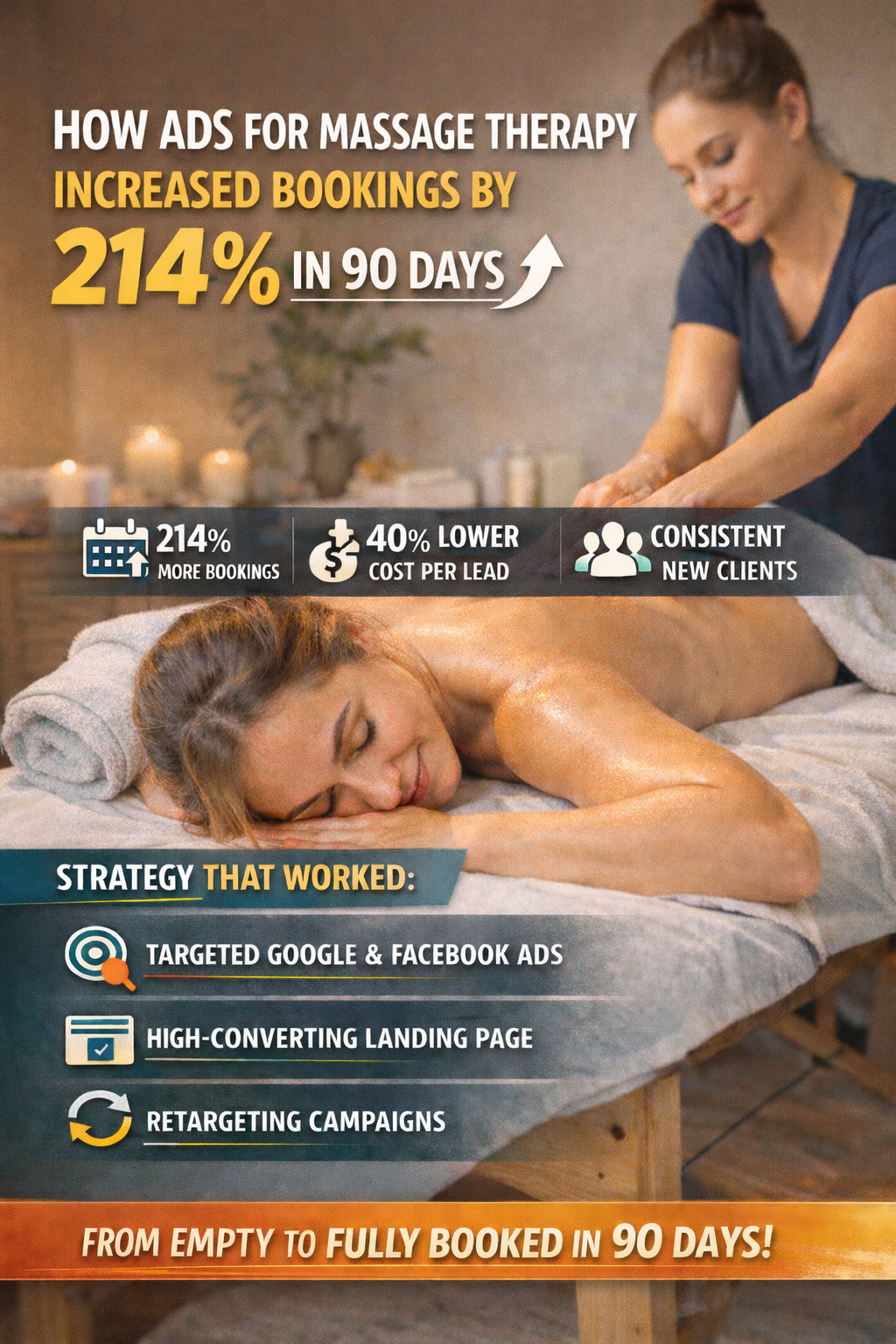
Own a Massage wellness clinic? Read here for more information on how ads can help your clinic!