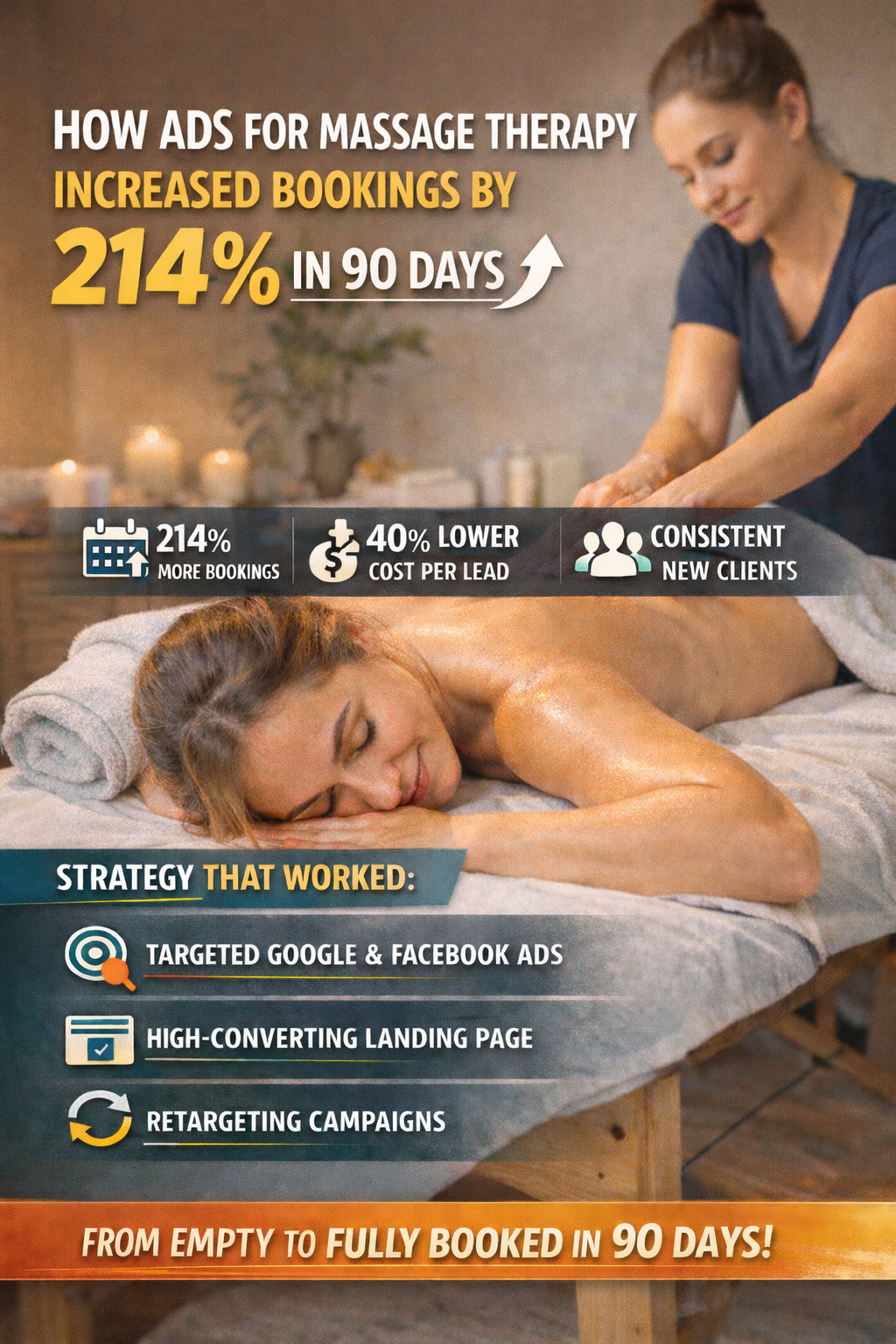

Ads for massage therapy were the core strategy we used to help a struggling massage therapy clinic in the United States transform its business from inconsistent bookings to a fully optimized, revenue-generating system in just 90 days. This case study breaks down exactly how our ads for massage therapy approach generated predictable leads, increased appointments, and built long-term growth for the clinic.
About Zheen Ali Consulting

At Zheen Ali Consulting, we specialize in helping service-based businesses grow through proven digital marketing strategies, including ads for massage therapy, social media marketing, Google Ads, and high-converting website design.
With over 3+ years of hands-on experience, Zheen Ali Consulting has worked closely with businesses in industries like massage therapy, dental clinics, and nail salons to generate more leads, increase bookings, and build consistent revenue systems. Our approach is simple—focus on what actually drives results, not just vanity metrics.
We understand that every business is different, which is why we create customized strategies tailored to each client’s goals. Whether it’s running high-performing ads for massage therapy, building a conversion-focused website, or managing social media campaigns, our goal is always the same: to help businesses grow sustainably and predictably.
At Zheen Ali Consulting, we don’t just run ads—we build systems that bring in clients consistently.
Introduction: Why Ads for Massage Therapy Matter More Than Ever
In today’s competitive wellness market, relying on word-of-mouth alone is no longer enough. Massage clinics are facing more competition than ever, with new businesses opening regularly and larger franchises dominating search results.
This is exactly where ads for massage therapy come into play. When done correctly, they allow clinics to appear in front of high-intent clients at the exact moment they are searching for services.
The massage therapy clinic we worked with had incredible service quality, experienced therapists, and a loyal but small client base. However, their growth had plateaued. They weren’t generating enough new clients, and their schedule had too many empty gaps.
They needed a system that would not only attract new clients but also do so consistently.
The Client Background
The clinic was based in a mid-sized U.S. city with a population of around 300,000 people. The area was saturated with wellness providers, including independent massage therapists, chiropractic clinics, and spa chains.
Before implementing ads for massage therapy, the clinic relied on:
Occasional Instagram posts
Basic Google Business Profile visibility
Word-of-mouth referrals
While these methods brought in some traffic, they were inconsistent and unpredictable. Some weeks were fully booked, while others were nearly empty.
Their average monthly bookings were around 85 appointments, and revenue was fluctuating significantly.
The Core Problem
The main issue wasn’t the service—it was visibility and lead generation.
The clinic simply wasn’t showing up when potential clients searched for massage therapy services online. And even when they did get traffic, their website wasn’t converting visitors into bookings.
Key problems included:
Low rankings for massage therapy keywords
No structured ads for massage therapy campaigns
A generic website with no clear call-to-action
No retargeting or follow-up system
This meant they were missing out on a large portion of potential clients actively searching for massage services every day.
Our Strategy: Building a Complete Ads for Massage Therapy System
Instead of running random ads, we built a complete ads for massage therapy system designed to generate consistent and predictable results.
This system had three main components:
Targeted traffic generation
High-converting landing pages
Conversion tracking and optimization
Each part played a critical role in the campaign’s success.
Step 1: Market Research and Keyword Strategy
The foundation of any successful ads for massage therapy campaign is understanding what potential clients are searching for.
We conducted in-depth keyword research and identified high-intent search terms such as:
massage therapy near me
deep tissue massage
sports massage therapy
relaxation massage
book massage appointment
These keywords were crucial because they indicated strong buying intent. People searching these terms were not just browsing—they were ready to book.
By focusing our ads for massage therapy around these keywords, we ensured we were targeting the right audience.
Step 2: Creating a High-Converting Landing Page
Sending traffic to a generic homepage is one of the biggest mistakes businesses make when running ads for massage therapy.
Instead, we built a dedicated landing page specifically designed to convert visitors into booked appointments.
This landing page included:
A clear headline focused on massage therapy services
A strong offer for first-time clients
Service breakdowns with benefits
Client testimonials for social proof
A simple and fast booking form
We also optimized the page for mobile users, as over 70% of traffic from ads for massage therapy comes from mobile devices.
Step 3: Google Ads for Massage Therapy
Google Ads played a major role in this campaign because they target users with immediate intent.
We created multiple campaigns focused on different services, including:
Deep tissue massage
Relaxation massage
Pain relief therapy
Each campaign used carefully selected keywords and ad copy designed to match user intent.
Our ads for massage therapy highlighted key benefits such as:
Same-day appointments
Certified therapists
First-time client discounts
This made the ads highly appealing and increased click-through rates.
Step 4: Facebook and Instagram Ads for Massage Therapy
While Google Ads captured high-intent users, Facebook and Instagram ads helped generate awareness and retarget potential clients.
We created visually appealing ads showcasing the relaxing experience of the clinic, combined with strong offers.
These ads for massage therapy targeted:
People interested in wellness and self-care
Individuals within a specific geographic radius
Users who had previously visited the website
Retargeting played a huge role here. Many people don’t book on their first visit, so bringing them back significantly increased conversions.
Step 5: Conversion Tracking and Optimization
Running ads for massage therapy without tracking is like driving blind.
We set up conversion tracking to monitor:
Form submissions
Appointment bookings
Phone calls
This data allowed us to continuously optimize the campaigns.
We identified which ads for massage therapy were performing best and shifted budget toward them, while pausing underperforming ads.
Campaign Timeline and Execution
The campaign was executed over 90 days, divided into three phases.
In the first 30 days, we focused on testing. We launched multiple variations of ads for massage therapy to see what worked best.
In days 30 to 60, we optimized based on performance data. We refined targeting, improved ad copy, and enhanced the landing page.
In the final 30 days, we scaled the campaign. We increased budget on top-performing ads for massage therapy and expanded reach.
The Results
The results exceeded expectations.
Within the first month, the clinic started seeing a noticeable increase in inquiries.
By the second month, their schedule was filling up faster than ever before.
After 90 days, the clinic experienced:
A 214% increase in bookings
A 40% reduction in cost per lead
A consistent flow of new clients
Improved client retention rates
Their monthly bookings grew from 85 to over 260 appointments.
Scaling Beyond 90 Days: Turning Growth Into a Long-Term System
While the first 90 days delivered strong results, the real value of this campaign came from what happened next. Many businesses see short-term success with advertising, but without the right systems in place, those results can plateau or even decline.
To prevent this, we focused on turning the clinic’s growth into a long-term, sustainable system.
The first step was refining the client journey. It wasn’t enough to simply generate bookings—we needed to maximize the value of every single client. This meant improving how the clinic handled new leads, follow-ups, and repeat visits.
We worked with the clinic to implement a simple but effective follow-up process. Every new client received a reminder for their appointment, followed by a post-visit message encouraging them to rebook. This alone significantly increased retention and lifetime value.
We also introduced limited-time packages and membership-style offers. Instead of relying only on one-time bookings, the clinic began offering bundled sessions at a slightly discounted rate. This created more predictable revenue and encouraged long-term commitment from clients.
Improving Conversion Rates Without Increasing Ad Spend
One of the most overlooked aspects of digital marketing is conversion rate optimization. Many businesses believe that spending more on ads is the only way to grow, but in reality, improving conversion rates can deliver even better results without increasing budget.
After the initial campaign, we analyzed user behavior on the landing page. We identified small friction points that were preventing some visitors from booking.
For example, we noticed that some users were dropping off before completing the booking form. To fix this, we simplified the form by reducing the number of required fields. This made the process faster and more user-friendly.
We also added urgency elements such as limited availability messaging. Instead of simply offering appointments, the page now emphasized that spots were filling quickly. This encouraged users to take action immediately.
Another improvement was adding more social proof. While the clinic already had satisfied clients, we made those testimonials more visible and impactful. Including real client experiences helped build trust and remove hesitation.
These changes resulted in a noticeable increase in conversion rates, meaning more bookings without increasing traffic.
Expanding Service Offerings Strategically
As demand grew, the clinic reached a point where their schedule was nearly full. At this stage, simply increasing ad spend would not have been effective unless capacity also increased.
We worked with the clinic to identify opportunities for expansion.
First, they hired an additional therapist to handle the increased demand. This allowed them to accept more bookings without sacrificing service quality.
Next, we helped them introduce new service variations, such as specialized treatments for athletes and clients with chronic pain. These services were positioned as premium offerings, allowing the clinic to increase its average booking value.
By expanding strategically, the clinic was able to grow revenue without overwhelming their existing team.
Building Brand Authority in the Local Market
Another key factor in long-term success was establishing the clinic as a trusted authority in their local area.
While paid advertising brought immediate results, we also focused on strengthening their overall online presence.
We optimized their Google Business Profile with updated photos, service descriptions, and consistent review generation. Encouraging happy clients to leave reviews helped improve credibility and visibility in local search results.
Additionally, we guided the clinic in creating simple educational content. This included short blog posts and social media updates explaining the benefits of different types of massage therapy.
This type of content served two purposes. First, it helped attract organic traffic over time. Second, it positioned the clinic as knowledgeable and trustworthy, making potential clients more likely to choose them.
Leveraging Data for Smarter Decisions
One of the biggest advantages of digital marketing is the ability to track and analyze data.
Throughout the campaign, we continuously monitored performance metrics to guide our decisions. Instead of guessing what might work, we relied on real data.
We tracked which services generated the most bookings, which ads performed best, and which audiences were most responsive. This allowed us to refine the strategy over time.
For example, we discovered that deep tissue massage services were particularly popular among a specific age group. Using this insight, we adjusted targeting and messaging to better appeal to that audience.
This data-driven approach ensured that every decision contributed to better results.
Overcoming Common Challenges
No campaign is without challenges, and this one was no exception.
One of the initial challenges was competition. The clinic was not the only business running ads, and standing out required strong messaging and positioning.
We addressed this by focusing on clear value propositions. Instead of generic ads, we highlighted what made the clinic unique, such as personalized care and experienced therapists.
Another challenge was managing demand. As bookings increased, the clinic needed to ensure they could maintain service quality. This required careful scheduling and gradual scaling.
By addressing these challenges proactively, we were able to maintain consistent growth without compromising results.
The Importance of Consistency
One of the biggest lessons from this case study is the importance of consistency.
Many businesses try digital marketing for a short period and expect immediate results. While some improvements can happen quickly, long-term success requires ongoing effort.
The clinic’s success was not just due to running ads, but to continuously improving and optimizing every part of the system.
From ad performance to landing page design to client experience, every element was refined over time.
This consistency is what allowed the clinic to move from unpredictable bookings to a stable and growing business.
What This Means for Other Businesses
This case study is not unique to one clinic. The same principles can be applied to other service-based businesses, including dental clinics and nail salons.
The key is understanding that growth comes from a combination of strategy, execution, and optimization.
Businesses that invest in a structured approach to digital marketing are far more likely to see consistent and scalable results.
Final Reflection
Looking back, the transformation of this massage therapy clinic highlights what is possible with the right approach.
What started as a business struggling with inconsistent bookings became a fully optimized operation with steady growth and predictable revenue.
The combination of targeted advertising, conversion-focused design, and ongoing optimization created a system that continues to deliver results.
For any business owner looking to grow, the takeaway is clear: success is not about trying random tactics, but about building a system that works—and continuously improving it over time

Breakdown of Key Wins
One of the biggest wins came from targeting high-intent keywords in our ads for massage therapy. This ensured that we were reaching people ready to book.
Another key factor was the landing page. By focusing on conversion, we turned more visitors into paying clients.
Retargeting also played a crucial role. Many clients needed multiple touchpoints before booking, and our ads for massage therapy ensured they kept seeing the clinic.
Long-Term Impact
Beyond the immediate results, the clinic now has a scalable marketing system.
They no longer rely on inconsistent referrals. Instead, they have predictable lead generation powered by ads for massage therapy.
This has allowed them to:
Hire additional therapists
Increase service pricing
Expand their offerings
Why Most Massage Clinics Fail with Ads
Many clinics try ads for massage therapy but fail because they:
Target the wrong audience
Use weak landing pages
Don’t track conversions
Stop campaigns too early
This case study shows that success comes from having a complete strategy, not just running ads.
Key Takeaways
Ads for massage therapy can transform a clinic’s growth when done correctly.
The key is combining high-intent targeting, strong offers, and continuous optimization.
This approach ensures consistent bookings and long-term success.
Final Thoughts
This case study demonstrates the power of ads for massage therapy in building a predictable and scalable business.
For massage clinics looking to grow, investing in a structured advertising system is no longer optional—it’s essential.
With the right strategy, any clinic can achieve similar results and turn their business into a fully booked operation.
How This Strategy Can Be Replicated for Other Local Service Businesses
The success of this massage therapy clinic was not based on luck or a one-time campaign. It was built on a repeatable system that can be applied to almost any local service-based business looking to grow.
Whether it’s a dental clinic, nail salon, or another wellness provider, the same core principles can drive consistent results when implemented correctly.
At the foundation of this approach is understanding customer intent. Most local service businesses make the mistake of trying to reach everyone, rather than focusing on people who are actively searching for their services. By targeting high-intent users, businesses can attract clients who are ready to take action instead of just browsing.
Another critical factor is the importance of a clear and simple offer. Many businesses overcomplicate their messaging, which leads to confusion and lower conversion rates. In contrast, this campaign focused on a straightforward value proposition that immediately communicated what the client would receive and why it mattered.
This simplicity made it easier for potential customers to make a decision, which ultimately led to more bookings.
The Role of Speed in Lead Conversion
One of the hidden drivers of success in this campaign was response time.
Generating leads is only part of the equation. How quickly those leads are handled can significantly impact conversion rates. In many cases, businesses lose potential clients simply because they don’t respond fast enough.
To address this, we encouraged the clinic to prioritize quick responses to inquiries. Whether it was a phone call, form submission, or message, responding within minutes instead of hours made a noticeable difference.
Fast response times create a better customer experience and increase trust. When a potential client feels that a business is attentive and professional, they are far more likely to book.
This is a simple adjustment, but it can dramatically improve results without any additional ad spend.